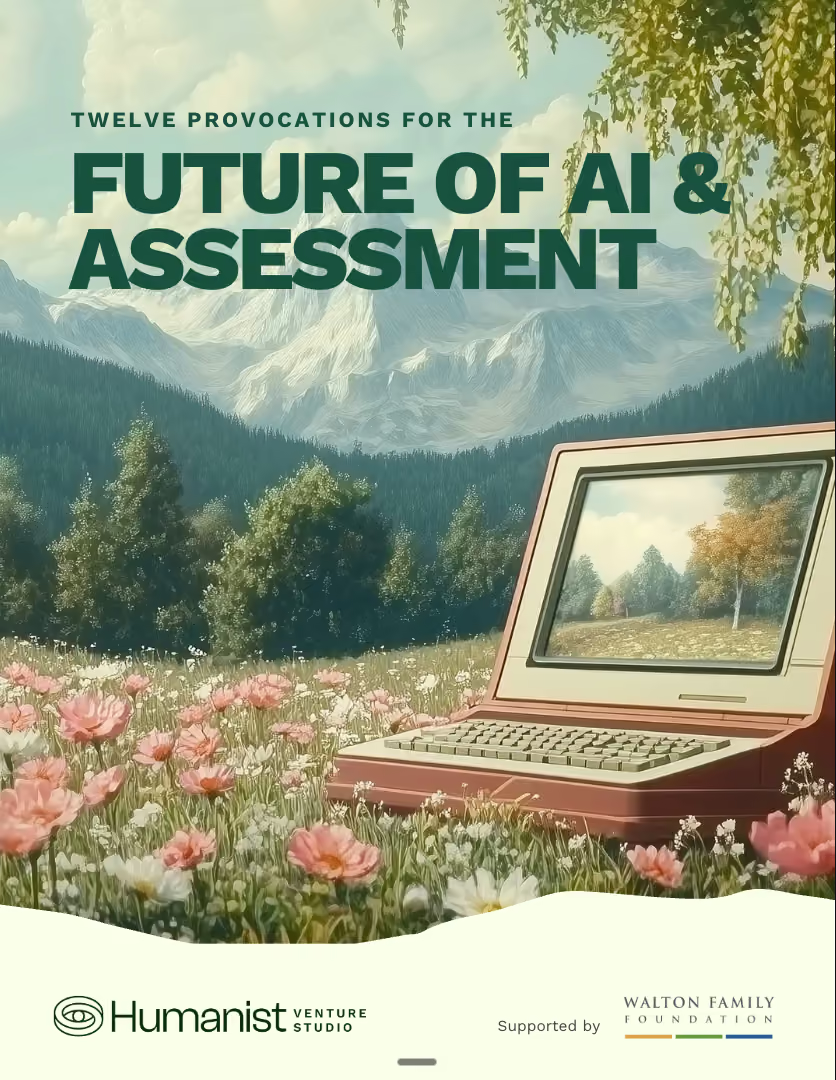
Twelve Provocations for the Future of AI and Assessment
AI is changing what students need to learn and how schools prove it. Explore 12 provocations for building assessment that measures human capability.
AI is changing what students need to learn, and how schools prove they’ve learned it.
In a world where machines can produce polished answers, assessment can no longer focus only on final outputs. Schools need better ways to see whether learners can frame problems, defend their reasoning, apply knowledge in context, and use AI without outsourcing understanding.
Today, too much of the AI assessment conversation starts with cheating detection, faster grading, and AI-proof assignments. The bigger opportunity is to redesign assessment around the human capabilities the new economy will reward: judgment, agency, creativity, collaboration, contextual intelligence, and AI fluency.
This paper offers 12 provocations for a more ambitious future of assessment — one where assessment happens in the flow of learning, feels like coaching rather than surveillance, captures process instead of just output, and gives educators real-time signals about what students need next.
The goal is not to make old tests faster. It is to build a new measurement architecture for human capability, one that helps learners understand their progress, helps educators act on better evidence, and lets proof of capability travel across school, college, and work.
Download the full report to explore the 12 provocations shaping the future of AI and assessment.
Authors: Allison Salisbury and Karen Alpuche